

The bridge between agile teams and enterprise scale
What you need, when you need it.
Simple. But no simpler than needed.
Advanced. But not more complex than needed.

This is the purpose of Modelithe
With the Modelithe tool, it is easy to start with the bare minimum to run a Kanban process for a single team. Modelithe gives issue-tracking on Task level in a simple flow, without adding challenges that prevents agile methods from working at scale.
The Modelithe method provides a structured path for combine the agility of small teams, with the needs to manage the interfaces between the teams in large scale organizations in the pace needed for fast, but sustainable growth:
Modelithe picks the best from the Agile Manifesto, Scrum, XP, Kanban, SAFe, LeSS and Scrum@Scale and contemporary issue tracking tools.
Then Modelithe strips away what doesn’t work or add value.
Finally, industry best practices relevant for the size of the specific company are added.
This is Modelithe.
Start simple
- Provide the bare minimum issue tracking required to run a successful Kanban.
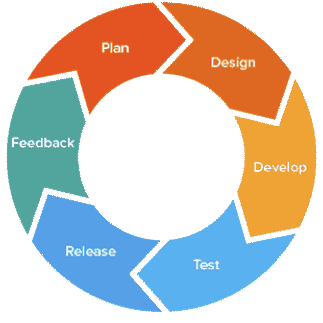
- Convert to Scrum and add Iterations to avoid ad-hoc fire-fighting
- Add Iterations Workpackages and Epics once the team mature, and need to prioritize work spanning more than a set of Task can describe.
- Once the company grows and several teams need to coordinate their deliverables, Versionable Modules and cross-team Features are added.
Grow when needed
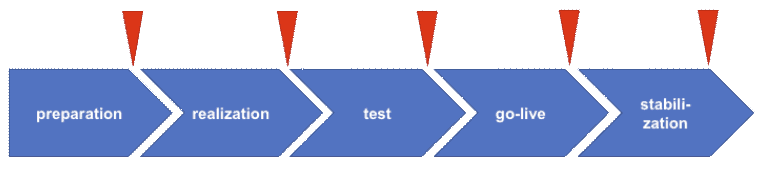
- Not until there is a need for formal Project management, in order to provide formal go-no-go decisions, Gates and Milestones need to be added.
- The correlation between Lines and Teams no longer need to match the need of a project.
- Eventually, the company grows large enough to face the dreaded multi-project Program management with inter-project dependencies.
The Modelithe tool
- Manage all aspects of the development journey
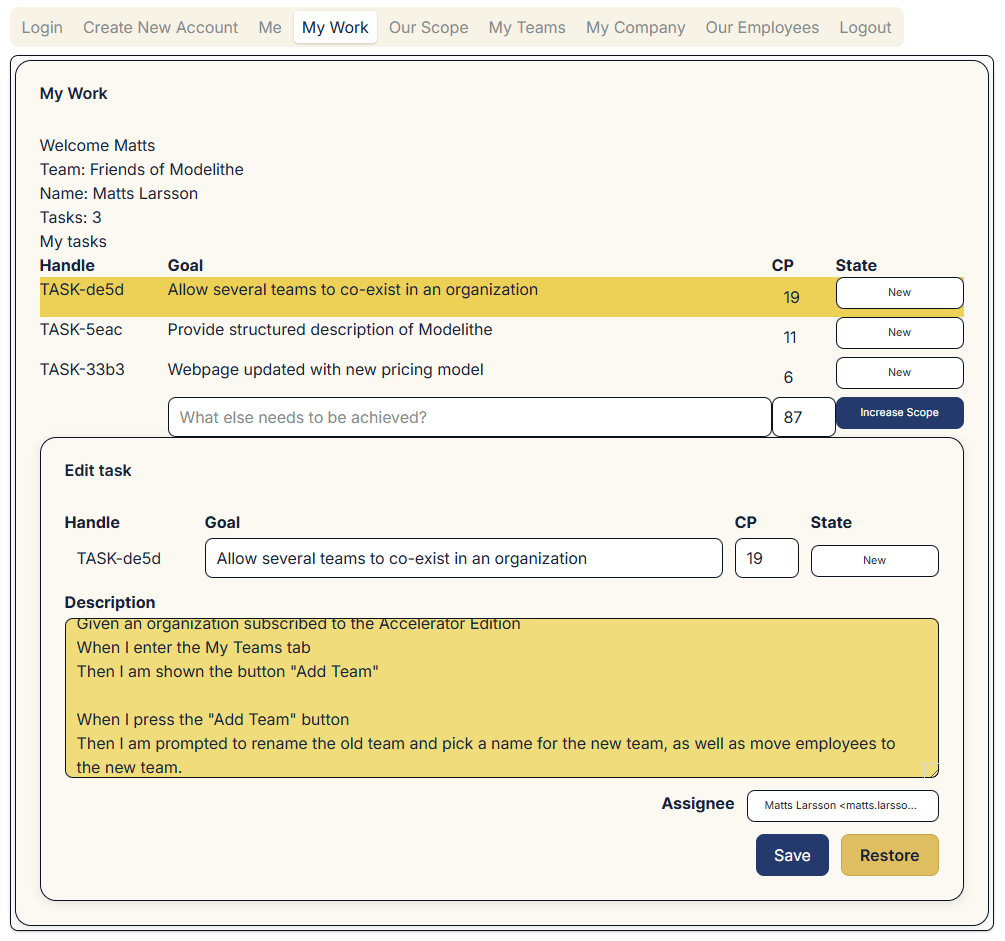
- Tasks, issue tracking Kanban- or Scum Boards for daily work
- Bug tracking during and after development
- Burn-Up, Burn-Down and other views for issue tracking
- Sorting, filtering and visualizing goals on all levels
- Daily Standups, Sprint Retrospectives and
- Labels, Epics and WorkPackages for abstraction
- WorkPackages for collaboration and deliveries
- Features, Requirements, Interfaces and Use-Cases for Auditing, Tracking and Product Management
- Documentation and source code management
- Teams – both line-, project-, product-oriented or virtual
- Estimation and resource allocation
- Project Management
- Gates, milestones a and checklists
- Deliverable tracking
- Gannt and other views
- Different editions depending on the maturity of the company protecting against feature overload – all with unlimited users
- Founders Edition: recommended for 2-15 people
- Accelerator Edition: recommended for 10-50 people
- Transonic Edition: recommended for 25-100 people
- Blazingly fast workflow to add a Task on your favorite device
- Android/iOS/macOS/Windows/Linux/Web
- Never miss a bug report or forget a Task to complete
The Modelithe method
- Focus on Achievements and Goals – not Work Items to be Done
- Only five distinct roles
- Accountable
- Approver
- Assignee
- Owner
- Stakeholder
- Start with Kanban or light-weight Scrum
- Add Scrum or other Cadence-based Iteration process
- Increase or Decrease Scope instead of adding or closing Issues.
- Organize Tasks for a Team by Labels, Epics or WorkPackages
- Create, split and merge Teams as needed with automatic resource re-allocation
- Coordinate the different WorkPackages from several Teams to achieve the delivery of a value-adding Feature
- Requirements, Use-Cases, Interfaces and Integrations are first-class citizens with no-overhead traceability to source code
- Clear separation between
- Assets
- Achievements
- Organization
- Workflows
- Processes
- Strategy
The Modelithe issue tracking tool is more than just a tool to track tasks, epics and features.
The Modelithe tool works just as well for for bug-tracking, or just as a personal todo-planner. But coupled with the Modelithe method, the Modelithe tool brings tracking into a complete project management system with transparency across the entire board.
All in order to fulfil the vision of Modelithe,
Bridge between agile and projects
Modelithe is the bridge between the agility required by the highly productive small team in a startup and the cross-team coordination required by large enterprise companies, allowing small companies and even open source projects grow to multi-country enterprises.
Agile
Agile methods as Scrum, XP or Kanban (chaos visualized) works wonders for small, autonomous teams in small companies and open source projects.
Enterprise
Enterprise methods such as PMBOK, PRINCE2 and even waterfall (dead in the water since the ’70s) are focused on large-scale project and program management that requires long-term planning and coordination.
Challenge of growth
None of the enterprise methods – not even scrum@scale or SAFe – are able to combine the path growing FROM a small team TO a world-wide enterprise.
The limitation of agile
Agile break down once the company needs to face the facts: They can’t do every project they want, because the money is limited. Or, they provide way too much overhead for a small team to manage.
The cost of enterprise
Larger systems and processes needs constant customization, consultant hours and are way too complex for small companies.
Modelithe is the modern alternative
Modelithe gently aids the teams to use tried-and-tested workflows on all levels without sacrificing the unique challenges posed by already-established enterprise processes.